Community masterclass on Transformer architecture and its mathematical foundations, open to all.
You can use a model without understanding how it works. You cannot adapt one to a low-resource language without that. Which is the point of training that goes at the mathematics rather than the surface.
The context
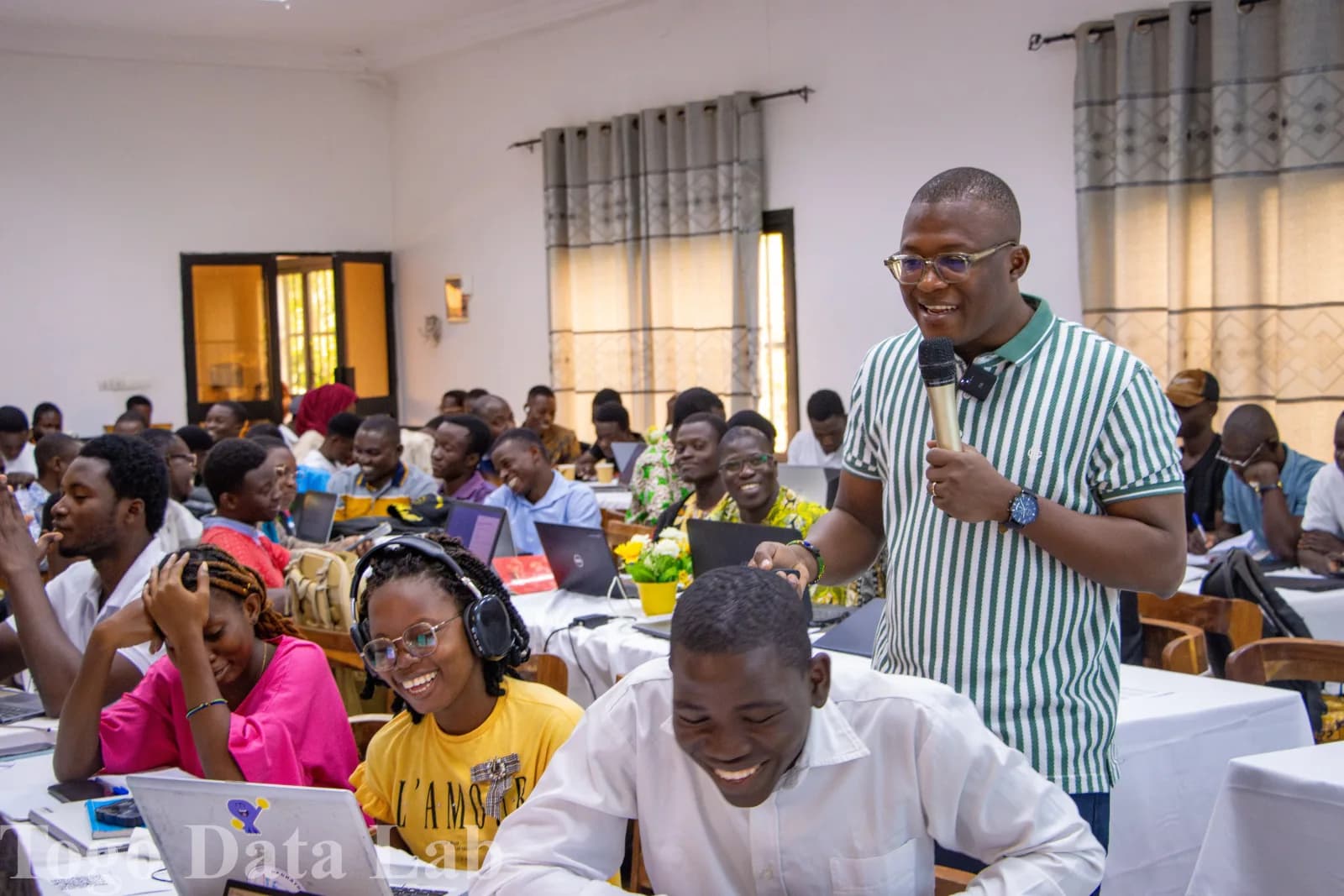
In July 2025 a masterclass on Transformers and large language models ran in Kara on the 14th and 15th, then in Lomé on the 18th and 19th. It was delivered by Togo Data Lab at the initiative of the ministry responsible for the digital economy, and led by Dr Pagdame Tiébékabé, a lecturer-researcher in mathematics at the University of Kara.
The programme went straight at the foundations: the attention mechanism, vector representations, encoding — the machinery that makes a model run, with theory and Python side by side.
Why we follow this work
Umbaji did not organise this masterclass and takes no credit for it: that belongs to the ministry, to Togo Data Lab and to the people who taught it. We follow it closely for a specific reason — technical skill in Togolese languages will not arrive from outside.
The choices that decide whether a model can handle Ewe or Kabiyè are not made at the interface. They are made in tokenisation, in how sounds are represented, in how attention treats sequences it was never calibrated for. Those are mathematical decisions, and they require trained people.
- Tokenisation designed for English segments a tonal language badly.
- A small corpus forces architectural trade-offs an abundant one never raises.
- Without understanding the mechanism, you observe that a model fails without knowing why.
What it changes
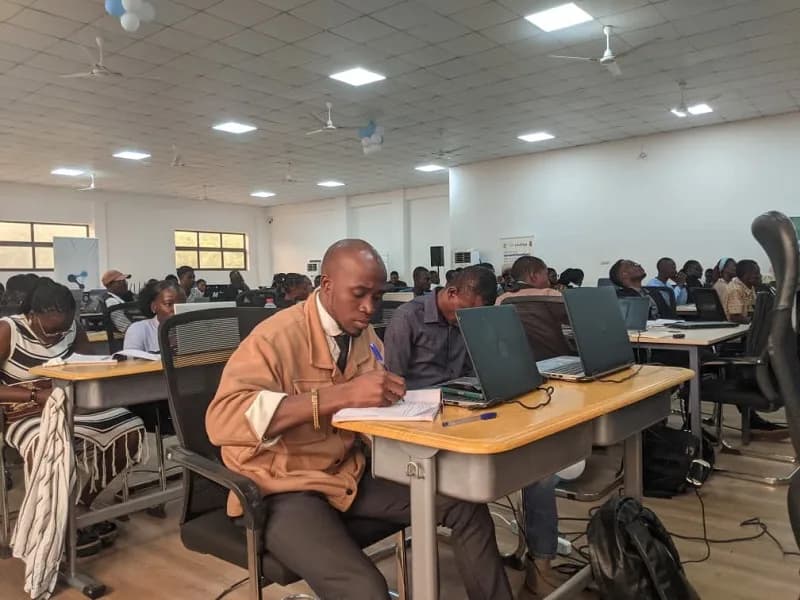
These sessions come one after another. After Transformers in July, a “Generative AI and common goods” session ran in September in Kara and Lomé, then a masterclass on AI for healthcare access in rural areas. The turnout at each says enough about the need — and every cohort widens the pool of people able to work on these languages.
What comes next
Two skills have to meet in the same people: speaking the languages concerned, and understanding how the models work. Separately, both already exist. It is their meeting that is rare, and it is exactly what training like this produces.
Do you teach, research, or want to contribute to the corpus that makes these models possible? Let's talk.